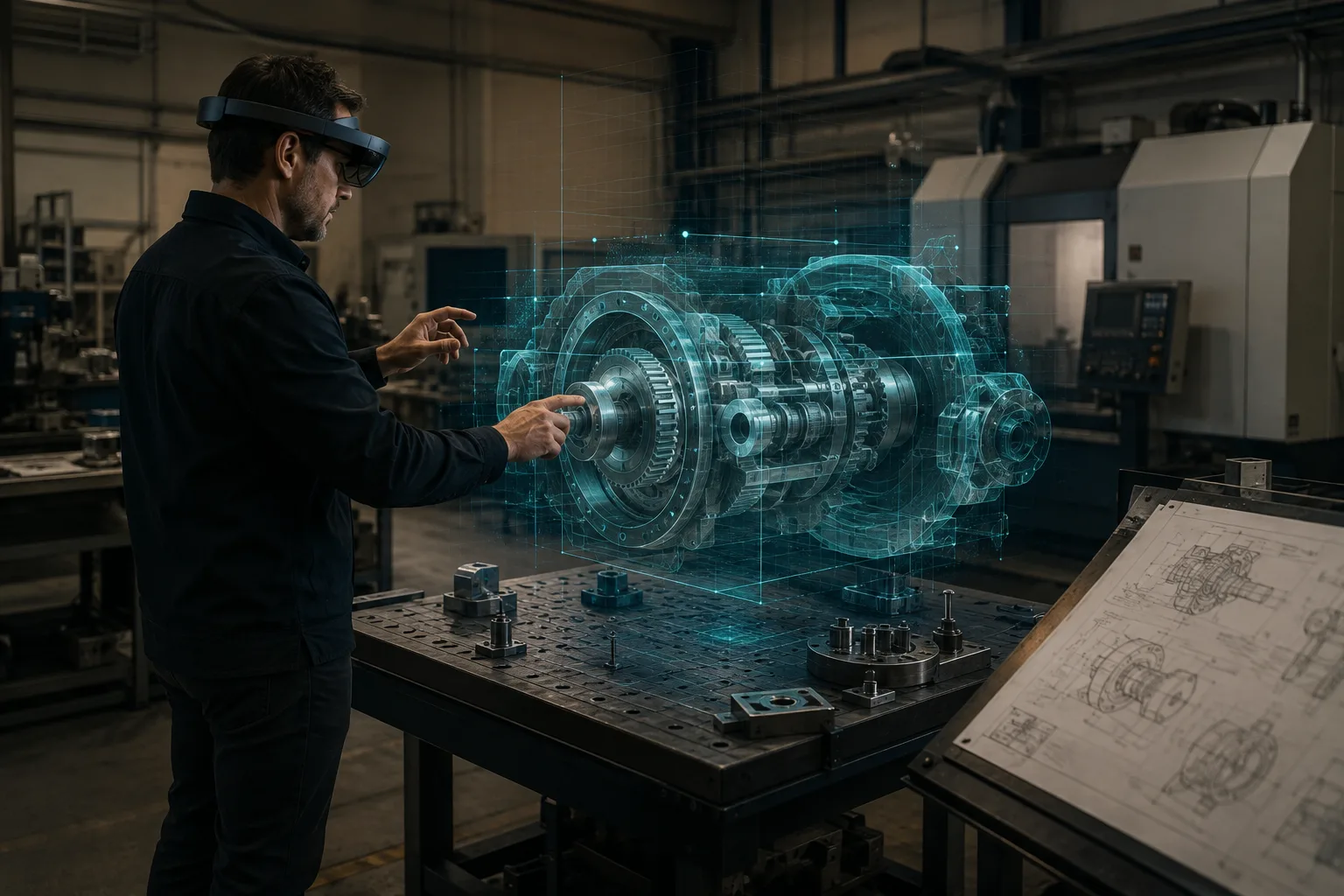
What this makes possible
A spatial architecture connects scene capture, reconstruction, tracking and an interactive viewer. We scope these components around the available sensors, scene update rate and deployment device, with measured latency and geometric accuracy requirements.
Where we focus
- Real-time 3D Gaussian Splatting & differential tile rasterization
- Neural Radiance Fields (NeRFs) & high-fidelity scene reconstruction
- 6-DoF Visual-Inertial SLAM (VIO) tracking
- Apple VisionOS (PolySpatial, RealityKit) native engineering
- Meta Quest Pro / 3 Enterprise OpenXR native runtimes
- WebGPU & WebXR zero-install browser spatial streaming
- Point cloud segmentation & LiDAR multimodal sensor fusion
- Industrial digital twins with real-time SCADA/IoT bi-directional sync
How we build it
3D Gaussian Splatting
Scene rendering evaluated for visual quality, frame time and artifacts on the intended device.
Visual-Inertial Spatial Tracking
Robust visual-inertial odometry fusing high-framerate IMU data with multi-camera feature tracking under adverse dynamic lighting.
Apple VisionOS & OpenXR Native Runtimes
Engineered specifically for enterprise headsets with custom C++/Rust kernels, hand-tracking gesture recognition, and spatial audio.
Bi-directional Digital Twin Telemetry
Synchronize live physical plant sensor streams into interactive 3D spatial environments for real-time remote diagnostics and control.